Geothermal energy utilization: an overview with emphasis on modelling challenges
Ali Cemal Benim
Düsseldorf University of Applied Sciences, Germany
ABSTRACT
Geothermal energy is a sustainable and low-carbon resource with the potential to significantly support global decarbonization efforts. Despite its considerable technical potential, its contribution to the current global energy mix remains modest, approximately 0.34%, constrained by high upfront costs, resource uncertainties, and limited institutional support. Nevertheless, its ability to deliver continuous, dispatchable base-load power distinguishes it as a valuable complement to intermittent renewables such as wind and solar.
Global installed geothermal capacity has expanded from roughly 10.7 GWe in 2009 to over 16.9 GWe by 2024, with more than thirty countries actively exploiting hydrothermal resources. Advances in reservoir characterization, high-temperature drilling, and power-plant technologies—including flash and binary cycles—have improved efficiency and broadened applicability. Emerging approaches, such as Enhanced Geothermal Systems (EGS) and supercritical resource development, further extend the potential for geothermal deployment.
In many types of geothermal energy utilization, especially in those with the highest potential such as EGS, the investment costs, thus, the associated risks are high. This causes a hesitant attitude of decision makers in front of new investments. Such large-scale geothermal systems are not amenable for laboratory testing. Thus, mathematical modelling and numerical simulation, although afflicted with many uncertainties emerge as an additional, important signpost that can support decision making. Obviously, mathematical models can also effectively be used in further development of existing systems and units.
In the present talk, first an overview on geothermal energy and its utilization for heat and power will be provided. In the second part, challenges for the mathematical modelling and numerical simulation in certain systems will be addressed and discussed on the basis of selected cases.
BIOGRAPHICAL NOTE
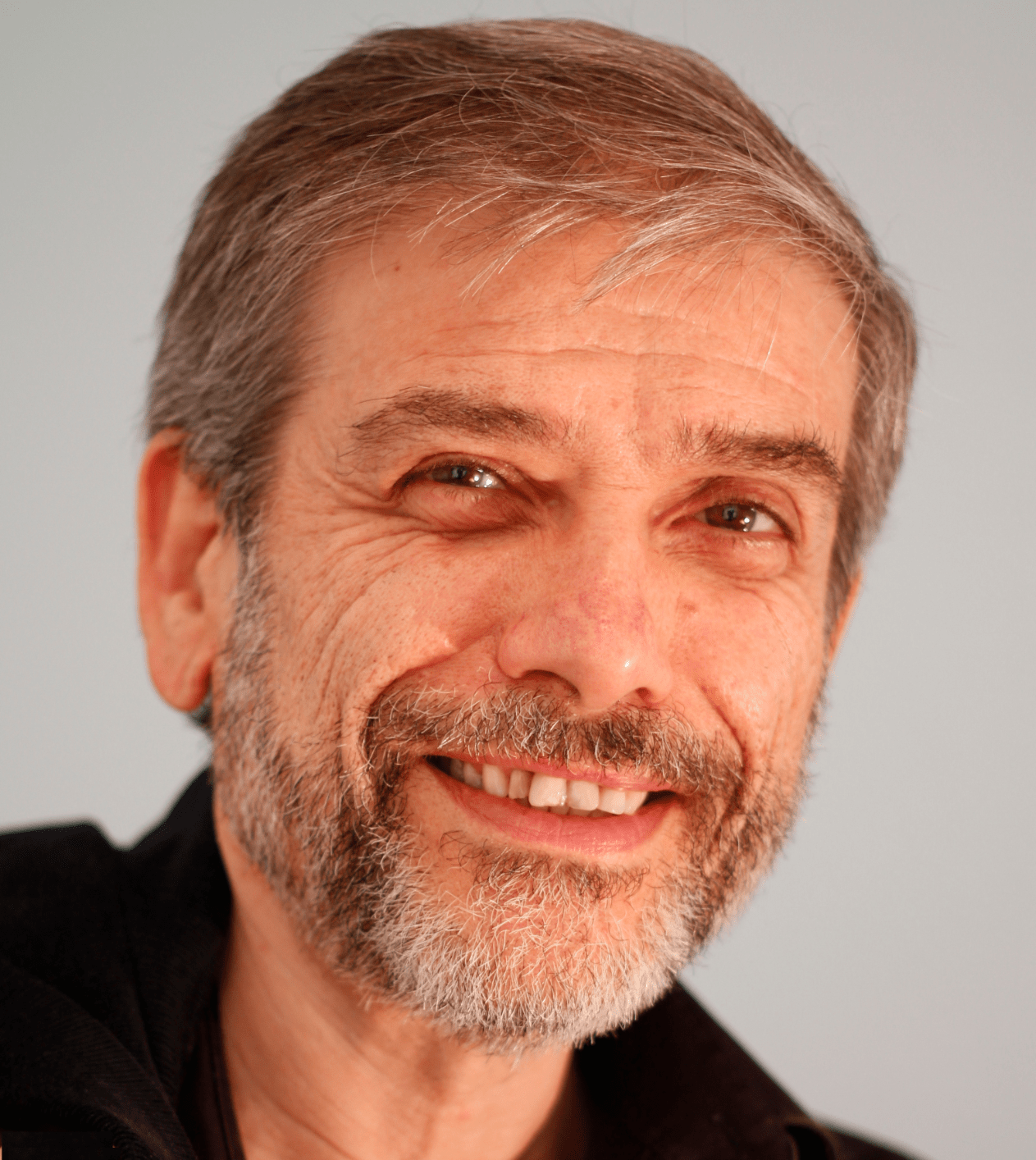
Prof. Dr.-Ing. habil. Ali Cemal Benim received his B.Sc. and M.Sc. degrees in Mechanical Engineering from Boğaziçi University, Istanbul, Turkey. He obtained his Ph.D. at the University of Stuttgart, Germany, at the Institute of Process Engineering and Power Plant Technology within the Faculty of Energy Technology. His doctoral thesis, titled Finite Element Modelling of Turbulent Flames, was awarded with the degree of distinction (summa cum laude).
Following his Ph.D., he joined ABB Turbo Systems Ltd. in Baden, Switzerland, where he worked in the Thermal Machinery Laboratory—an R&D department serving the entire ABB enterprise. There, he gained extensive experience in industrial applications of fluid flow, heat transfer, and combustion, with particular emphasis on gas turbine combustion and turbomachinery. He also served as Manager of the Computational Flow and Combustion Modelling Group.
Since 1996, Prof. Benim has been Professor of Energy Technology at the Düsseldorf University of Applied Sciences, Faculty of Mechanical and Process Engineering. Since 2025, he is also Professor in Mechanical Engineering at Bursa Technical University in Turkey. His research focuses on mathematical modelling and computational simulation of fluid flow, heat, and mass transfer in a wide range of engineering applications, with emphasis on energy technology. Much of his work has been conducted in collaboration with industrial partners. He has also served as a Visiting Professor at universities in China, India, Poland, Switzerland, and Turkey.
Prof. Benim has authored and co-authored numerous publications across diverse areas, including numerical methods (finite element, finite volume, finite difference, finite analytic, lattice Bolzmann) for flow problems, turbulence, two-phase flows, combustion (gaseous, liquid, and solid fossil fuels, biomass, hydrogen, ammonia), gasification, gas turbine combustors, utility boilers, industrial burners, convective and radiative heat transfer, geothermal energy, thermoelectric generators, solar chimneys, wind power, turbomachinery, aerodynamics, environmental flows, and biofluid dynamics. He has been listed among the top 2% most cited scientists worldwide since 2019.
Prof. Benim currently serves as an Editor of Energy Conversion and Management, Executive Editor of Progress in Computational Fluid Dynamics – An International Journal, Editor-in-Chief of Computation, and Section Editor-in-Chief of Fire. He is also a member of the editorial boards of numerous other international journals, including Archives of Thermodynamics, Energy Storage and Saving, International Energy Technology and Policy, International Journal of Global Energy Issues, Bulletin of the Mineral Research and Exploration, International Journal of Numerical Methods in Heat and Fluid Flow, Ocean Engineering and Vehicle Design. In addition, he continues to play an active organizational role in international conference series such as the ASME Turbo Expo and the International Conference on Computational Heat and Mass Transfer.